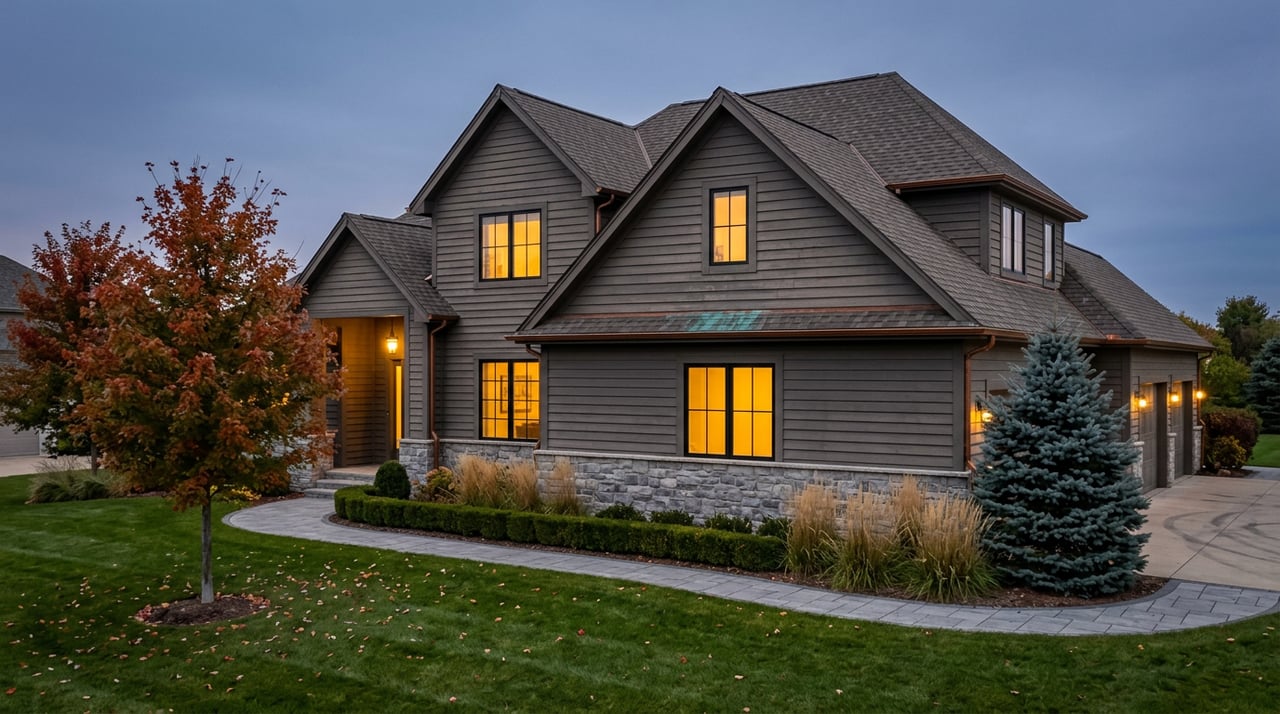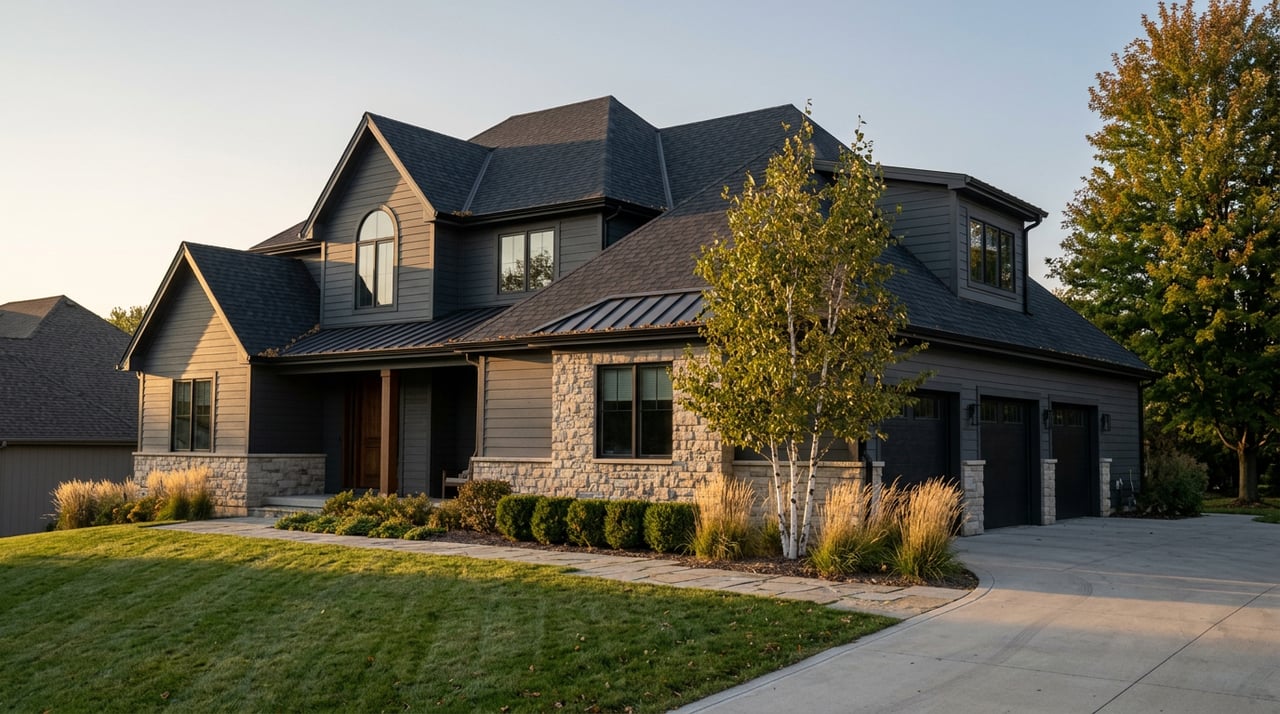
Two townhomes go live in Highlands Ranch the same week, same asking price, same square footage, same MLS line reading "HOA: $174/quarter." A buyer comparing the two on paper would reasonably assume the housing costs are identical down to the dollar. They are not, and the gap has nothing to do with the number everyone quotes out loud.
That $174 figure is the 2026 quarterly assessment from the Highlands Ranch Community Association, the master association that runs the four recreation centers, the trails, and the Backcountry Wilderness Area for most of the community. It is real, it is public, and it went up $12 this year, a 1.75 percent increase over 2025. But it is also only one layer of what a homeowner in Highlands Ranch actually pays, and the second layer, the one that varies wildly by subdivision, is the reason two homes at the same price can carry very different monthly costs. Reading the fee structure correctly before writing an offer, rather than discovering it at the resale certificate stage, is the difference between an accurate budget and an expensive surprise.
What the $174 a quarter is actually funding
According to HRCA's 2026 proposed budget, the quarterly homeowner assessment splits into two pieces: $16 goes to the Administrative Fund, and $158 goes to the Recreation Fund. That split matters more than it looks. The recreation portion is what pays for the four rec centers, Northridge, Southridge, Eastridge, and Westridge, along with capital improvements and debt service on those facilities. The administrative portion covers something buyers rarely think about until it affects them directly: covenant enforcement, billing, and community events.
That covenant enforcement piece is worth sitting with for a second. HRCA's governing documents require members to follow the community's architectural and use restrictions, and the association actively enforces them to protect property values. If a previous owner poured a patio, changed exterior paint, or replaced a fence without submitting plans to the Architectural Review Committee first, that violation can transfer to the new owner along with the obligation to fix it. The $16 a quarter that looks like a rounding error on the budget sheet is the line item funding the department that can eventually knock on a new owner's door.
The second bill most listing sheets don't show
Here is where the two townhomes stop looking identical. HRCA membership is the master layer, but most Highlands Ranch neighborhoods also sit inside a sub-association, a separate HOA that handles the things HRCA doesn't touch: private landscaping, snow removal on internal roads, exterior insurance for attached units, or a neighborhood-specific pool. Those sub-HOA dues typically run somewhere in the $25 to $120 a month range depending on what services the subdivision provides, and they are billed separately from the HRCA quarterly assessment, often on a different schedule.
A buyer who only asks "what's the HOA" and accepts the HRCA number as the full answer has priced in maybe half the actual assessment load. The MLS sheet lists the master fee because it's the same figure for most of the community and easy to standardize. The sub-HOA fee, the one that actually differs from block to block, usually shows up only in the governing documents and the resale certificate, which under Colorado's Common Interest Ownership Act is something a buyer is entitled to review before closing, not after.
The subdivisions that pay a completely different structure
A smaller set of Highlands Ranch properties don't pay the standard recreation-inclusive rate at all. HRCA's own fee schedule carves out an administrative-only assessment, in the neighborhood of $61 to $64 annually, for commercial properties and for specific residential subdivisions: Gleneagles Village, The Retreat, The Village at Highlands Ranch, and Palomino Park's Gold Peak and Silver Mesa sections.
| Fee structure | Who pays it | Approximate annual cost | What it funds |
|---|---|---|---|
| Standard HRCA assessment | Most single-family homes | $696/year ($174/quarter) | Rec centers, trails, Backcountry access, covenant enforcement |
| Admin-only assessment | Gleneagles Village, The Retreat, The Village at Highlands Ranch, Palomino Park (Gold Peak, Silver Mesa), commercial properties | Roughly $61-$64/year | Administrative functions only, not the recreation fund |
A $64 line item sitting next to a $696 line item looks like an obvious discount. It usually isn't one. HRCA itself notes that most property owners get rec center access as part of membership, but some communities and housing types have limited or different access arrangements, which is precisely the situation in these admin-only pockets. These are also, not coincidentally, the parts of Highlands Ranch built as condominiums or attached townhomes, and attached-home associations almost always carry their own dues for the things a detached single-family HOA never has to touch: shared roofs, building exteriors, master insurance policies, structural reserves. The buyer comparing a $64 HRCA line to a $696 HRCA line is not comparing a cheap option to an expensive one. They are comparing a partial number to a fuller one, and the missing piece shows up on the sub-association's books instead.
Why this changes the math at the negotiation table
Put the two layers together and the picture for that pair of identically priced townhomes gets clearer. One might sit in a standard subdivision paying the full $174 a quarter plus a sub-HOA in the $50 to $80 a month range, landing total annual association costs somewhere around $1,300 to $1,700. The other might sit in one of the admin-only pockets paying roughly $64 a year to HRCA, but with a condo association fee that runs higher precisely because it's absorbing exterior maintenance and building insurance that the first home's HOA never has to budget for. Same list price. Same square footage. Different total carrying cost, and the difference is invisible until someone pulls the actual paperwork.
This is also where HRCA's own quarterly assessment page is worth reading directly rather than taking secondhand. It lays out the current billing structure and due dates in plain terms, and it's the fastest way to confirm which bucket a specific address falls into before assuming anything based on the neighborhood name alone.
What to actually check before writing an offer
A buyer working through a Highlands Ranch contract should treat the HOA line as a starting point, not a conclusion. A short list of what to pull, in roughly the order it matters:
- The resale certificate for the specific property, which discloses current assessments, any pending special assessments, and outstanding violations tied to the unit itself.
- The supplemental declaration for that subdivision, which determines whether it's on the standard HRCA rate or one of the admin-only structures.
- Whether a sub-association exists at all, and if so, its current dues, billing cadence, and what services it covers versus what HRCA covers.
- Recent board meeting minutes and financial statements, which often flag upcoming capital projects or the kind of deferred maintenance that turns into a special assessment down the road.
- Any recorded covenant violations tied to the property's history, since unresolved architectural issues can become the new owner's problem the day title transfers.
None of this shows up in a portal search. All of it shows up in the documents a seller is required to provide once a property is under contract, which is exactly why the smart move is asking for them early rather than waiting for the standard disclosure timeline to run its course.
Frequently asked questions
Is HRCA membership mandatory for every home in Highlands Ranch? Most residential properties are members, but not all. Some homes sit only in a neighborhood HOA or a metro district without HRCA affiliation. The only reliable way to confirm status for a specific address is the recorded declaration and the resale certificate.
Do the admin-only subdivisions still get to use the rec centers? Access rules vary by property type and are spelled out in the subdivision's supplemental declaration rather than in the master HRCA documents. This is one of the details worth confirming in writing before assuming access either way.
Who do I contact with questions about a specific bill or assessment history? HRCA's property owner services team handles billing and assessment questions directly, and their online assessment page is the current source for rates and due dates rather than any third-party estimate.
The number on the listing sheet was never designed to mislead anyone. It's simply the one figure that's the same across most of the community, which makes it easy to print and easy to compare. The real cost of owning in Highlands Ranch lives one layer deeper, in the sub-association dues and the subdivision-specific structure that only the governing documents reveal. Buyers who ask for those documents before they're contractually required to are the ones who don't get surprised at closing.
If you're comparing Highlands Ranch properties and want the real total, not just the number on the sheet, T.J. Gordon can walk through the resale certificate and sub-association details on any specific address before you write an offer. Get your free home valuation, or let's connect.