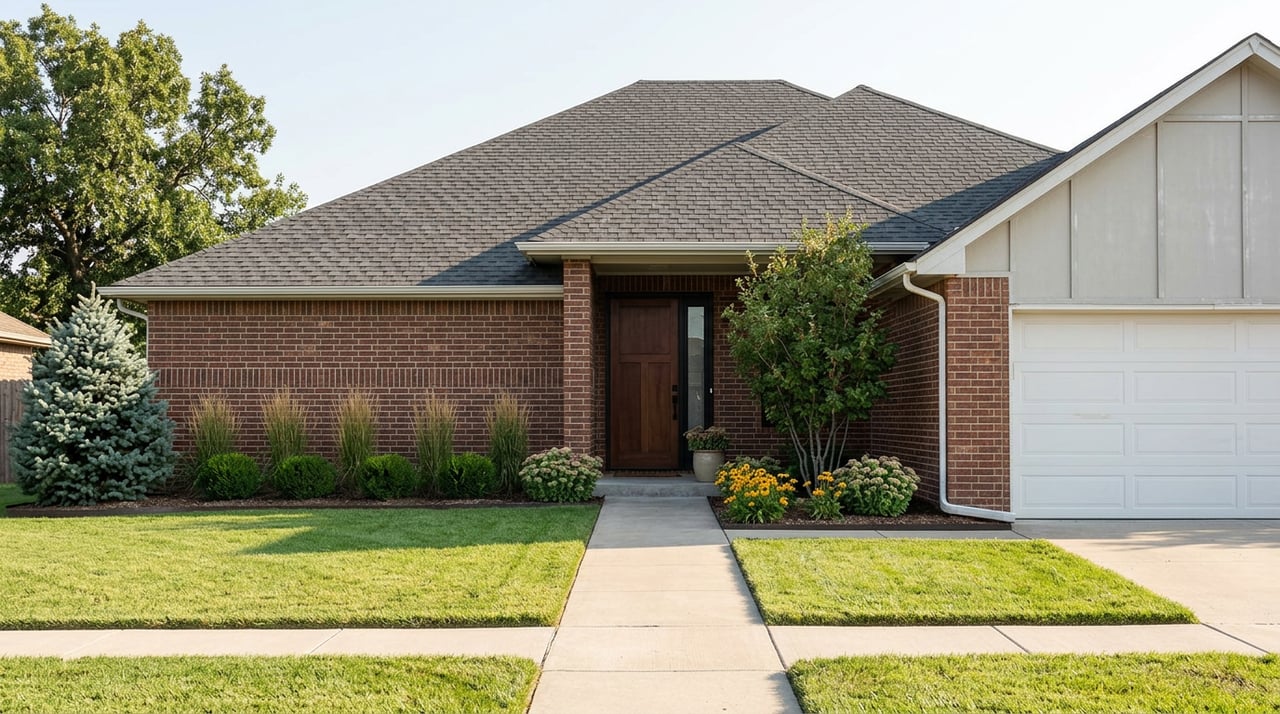
Open a Douglas County property tax statement for a home in Founders Village and you'll find the Town of Castle Rock listed at a mill levy of 1.139. On the same page, a few lines down, sits the Founders Village Metropolitan District at 88.683 mills. Same property. Same tax bill. Two of its taxing authorities, and one of them is charging roughly eighty times what the other one does.
Most buyers assume the town they're moving to sets the terms of their property tax. In a large share of Castle Rock, it doesn't. The town's own levy barely registers. The metro district levy can make up a substantial portion of a home's property tax bill.
What a metro district actually is, and why the Town's number stays so small
A metropolitan district is a separate unit of local government, formed under state law, usually by a developer at the time a subdivision gets built. It issues bonds to pay for the roads, water lines, and parks that a new neighborhood needs before anyone has moved in, then repays that debt over decades through a dedicated mill levy on the homes inside its boundary. Several Castle Rock neighborhoods carry one. Some carry more than one at a time.
This isn't incidental to the town's own tax structure. It's load-bearing. Castle Rock's town manager, David Corliss, has said publicly that the presence of metro district levies functions as a check on how much the town itself can ask voters to approve. When residents suggest raising the town's own property tax, he's pointed to what metro districts already charge as the reason the town holds back. The town's levy stays close to zero in part because the district levy next to it is already so high.
The same tax bill, two very different numbers
The gap isn't a Founders Village quirk. Town reporting has put metro district levies across Castle Rock ranging from roughly 40 mills to 88 mills, depending on the neighborhood and how much of the original construction debt is still outstanding. Here's what one certified Douglas County tax district looks like, line by line, for a home that happens to sit inside both the Town of Castle Rock and the Founders Village Metropolitan District:
| Taxing Authority | Certified Mill Levy |
|---|---|
| Town of Castle Rock | 1.139 |
| Douglas County Government | 18.524 |
| Douglas County Re-1 School District | 35.743 |
| Founders Village Metropolitan District | 88.683 |
The school district and the county government are the taxing bodies most buyers expect to see and budget for. The metro district line, in a neighborhood like this one, outweighs both of them combined. A home a few miles away, inside a district with a lower or newer levy, can carry a very different total bill at a similar price point. The address matters more than the sale price when it comes to predicting the tax line.
The Meadows' debt history
The Meadows, the town's largest master-planned neighborhood, is governed by seven separate metro districts. A CBS Colorado investigation reported on the districts' bond debt and governance. The original bonds, issued in the 1980s to fund the community's infrastructure, were restructured more than once. Decades later, homeowners had paid property taxes the entire time, and not one dollar of the original principal had been paid down. By early 2025, the investigation put the district's collective bond debt at roughly $434 million. By the most recent public accounting in 2026, that figure had grown to around $454 million.
The mill levy itself is fixed at 35 mills and cannot be raised, a real protection written into the district's bond terms. The debt kept growing anyway, through compounding interest on money that was never repaid.
For most of the districts' history, people affiliated with the original developer and bondholders held the boards. Meadows residents organized and ran for board seats after the CBS investigation. In the May 2025 election, homeowners won control of five of the seven districts. In the district holding the master bond debt, residents who tried to run were told by attorneys for the district that their properties fell outside its boundary and they were ineligible to serve.
Not every district tells the same story
The Meadows' history illustrates how district governance and bond structures can affect homeowners. Founders Village, which went through its own 1991 bankruptcy restructuring of its original 1986 bonds, is on a bond schedule that the district's own communications say will let it adopt a meaningfully lower mill levy once that debt is discharged after 2031. Newer districts, like the Lanterns Metro District serving the Montaine neighborhood, were built under service plans with capped mill levies and defined debt terms from the start, and carry the ability to refinance as the community matures.
Some neighborhoods separate the two systems more clearly for buyers. In Crystal Valley Ranch, a homeowners association charging in the range of fifty to one hundred dollars a month handles amenities and covenants, while a metro district mill levy runs separately through the property tax bill. The HOA fee and the district levy are separate charges, governed by different boards.
Across the town as a whole, Castle Rock's 38 active metro districts carried close to $991 million in combined debt as of the town's 2022 accounting, an increase of $48.2 million from the year before. The trend line only moves one direction until a district's bonds are actually retired.
The paperwork that's supposed to catch this before you sign
Colorado law builds in more than one checkpoint for exactly this situation, and knowing where each one lands in a transaction is the difference between a line item you expected and one you didn't.
- The Colorado Association of Home Builders says every standard Colorado purchase contract carries a bold, all-capital disclosure under state law informing the buyer that the property may sit inside a special taxing district and pointing them toward the county treasurer and assessor for more detail.
- According to the Colorado Division of Local Government, for any metropolitan district organized on or after January 1, 2000, the seller is required by statute to hand the buyer the district's official website, which by law must include a plain-language description of services, the district's authorized debt, and its maximum allowable mill levy.
- For districts that have existed since August 7, 2013, a separate public disclosure document naming the district and its powers is recorded with the county clerk and recorder, tied directly to the property.
- Districts are also required to send an annual transparency notice to residents listing the current mill levy, board meeting schedule, and election information, so the number a buyer sees at closing isn't the last time it gets updated.
None of this paperwork is hidden. It's just easy to skim past when a buyer is focused on inspection deadlines and financing contingencies instead of a document titled with a statute number.
What this actually means if you're buying or selling here
If you're a buyer, ask for the district's certified mill levy and its recent trend before you write an offer, not after your lender runs the numbers. If you're comparing two Castle Rock homes at a similar price, the metro district each one sits in can move your effective monthly cost by more than an HOA fee ever will. If you're selling in a neighborhood with a metro district, be ready to explain what the levy funds and where it stands relative to the district's original debt schedule. Transparency here reads as confidence, not a red flag.
Does every home in Castle Rock sit inside a metro district? No. Some established neighborhoods built before this financing model became standard fall outside any district boundary. Since 2000, though, the model has become close to the default for new subdivisions across Douglas County, so assuming a newer build has one is a reasonable starting point.
Is a metro district the same thing as an HOA? No. A metro district is a unit of government with taxing authority. An HOA is a private nonprofit that enforces covenants and manages shared amenities. Some Castle Rock neighborhoods, like Crystal Valley Ranch, carry both, billed and governed separately.
Will my mill levy go down over time? It depends entirely on the district's bond structure. Founders Village expects a significant drop once its current bonds are discharged after 2031. The Meadows' rate is fixed but the underlying debt has kept growing through compounding interest. Ask for the specific district's own projection rather than assuming either pattern applies.
A tax bill with levies from multiple taxing authorities is not a reason to avoid a neighborhood. It is a reason to ask the right question before you're under contract instead of after. T.J. Gordon has spent years walking Castle Rock buyers and sellers through exactly this kind of local detail, the ones that don't show up on a listing sheet but absolutely show up on a tax bill. If you're weighing a purchase or a sale here, let's connect and get you a clear read on what the address actually costs.
This article is general information, not legal, tax or financial advice. Consult a qualified professional about your situation.