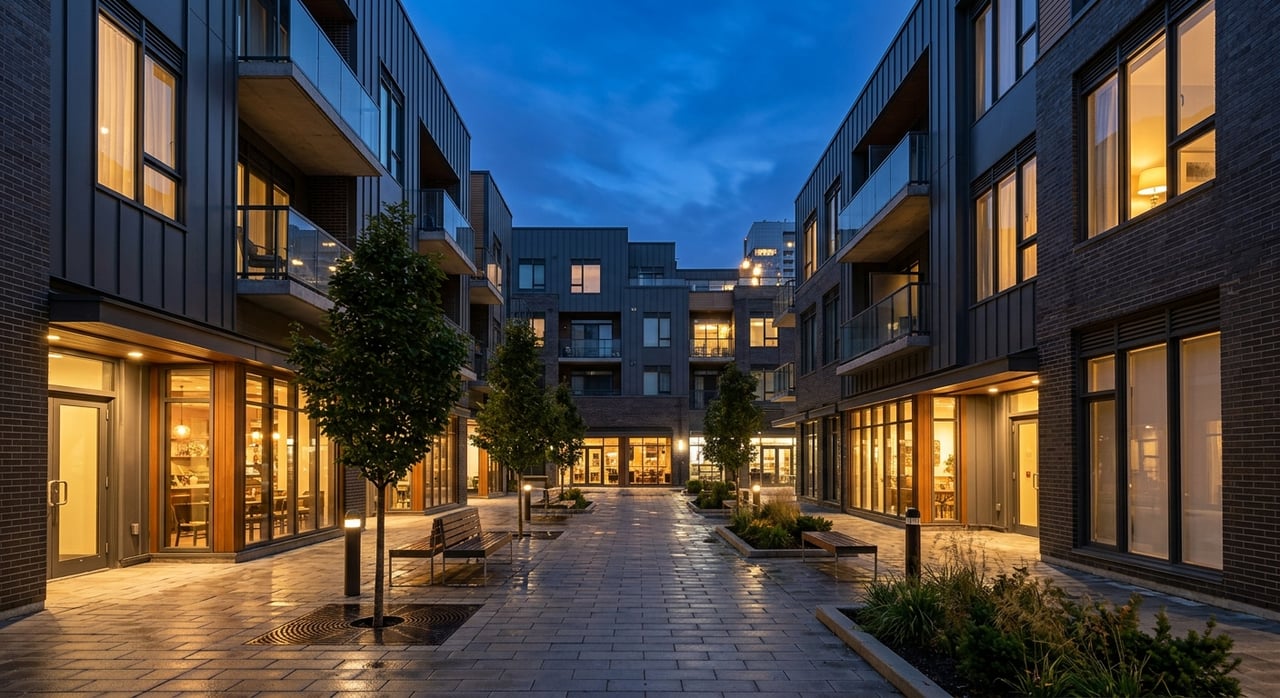
If you want a neighborhood that feels more connected than a typical suburb but less intense than a major urban core, Belmar and central Lakewood deserve a closer look. For many buyers and renters, the challenge is finding a place where everyday errands, dining, parks, and commuting options all work together without giving up breathing room. This guide will help you understand how Belmar fits into Lakewood, what kind of lifestyle you can expect, and how housing choices vary across the area. Let’s dive in.
Belmar’s Role in Lakewood
Belmar is more than a shopping district. The City of Lakewood describes it as Lakewood’s downtown, located at Alameda Avenue and Wadsworth Boulevard on the former Villa Italia Mall site.
Built in 2004, Belmar spans 22 city blocks and blends retail, dining, entertainment, living, and office space. City information notes more than 1,300 residential units, artist studios, luxury condominiums, and more than 250,000 square feet of office space in the district.
Lakewood’s broader downtown planning also shows that this area is part of a bigger mixed-use environment. Along the West Alameda corridor, the city reports more than 2 million square feet of restaurant, retail, and commercial space supported by nearly 1,600 residential units.
For you as a buyer, renter, or relocator, that matters because Belmar is not trying to be central Denver. It functions more like a small downtown inside a larger residential city, which gives you a blend of convenience and space that can be hard to find.
What Daily Life Feels Like
One of Belmar’s biggest draws is how many day-to-day needs are close together. The district includes more than 80 shops and restaurants, along with galleries, gift shops, doctors’ offices, spas, and a movie theater.
That mix creates a lifestyle where you can combine errands, dining, and entertainment in one area. Instead of planning a full day around driving from place to place, you may find that central Lakewood offers a more streamlined routine.
The district also hosts seasonal community amenities in its outdoor plaza. The city notes a summer concert series and a winter ice skating rink, which add activity beyond regular retail hours.
Parks and Culture Nearby
A major advantage of central Lakewood is that the built environment is balanced by meaningful green space. Belmar Park covers 132 acres and includes nearly two miles of paved trails, more than 17 acres of water, a creek, and public art.
If you want an area where you can walk to restaurants and still have access to open space, this park is a big part of the appeal. It gives the district a stronger outdoor identity than many mixed-use centers.
Heritage Lakewood Belmar Park adds another layer to the area. Located within the park, it includes 15 historic buildings, more than 40,000 artifacts, rotating and permanent exhibits, a festival area, and an outdoor amphitheater.
For arts and performance options, the Lakewood Cultural Center is another nearby asset. The city describes it as a venue for music, theater, and dance performances, with three rotating visual arts galleries.
If you want to explore beyond Belmar, Lakewood also points to 40 West Arts in northeast Lakewood as a Colorado Certified Creative District. The 40 West ArtLine connects parks, transit, historic areas, and other destinations along a four-mile walking and biking route.
Transit and Commuting Options
Transit access is one reason Belmar and central Lakewood appeal to people who want flexibility. RTD’s W Line is a 12.1-mile light rail line that connects Union Station to Jefferson County Government Center-Golden through Denver, Lakewood, and Golden.
RTD reports peak service every 7.5 minutes and off-peak service every 15 minutes between Denver and Federal Center. West of Federal Center, service runs every 15 minutes.
For central Lakewood, nearby stations include Lakewood-Wadsworth, Lamar, and Federal Center. These stations help connect the area to downtown Denver and other parts of the west metro.
Lakewood planning documents also describe the West Colfax and W Line corridor as an area where higher-density, mixed-use, and transit-oriented development is appropriate. In practical terms, that helps explain why you will see more condos, townhomes, and multifamily options in central Lakewood than in many farther-out suburban areas.
Housing Types in Central Lakewood
If you are trying to decide whether Belmar or central Lakewood fits your budget, housing type is one of the most important factors. Lakewood’s Strategic Housing Plan shows that condos and townhome or duplex units generally sell for less than detached single-family homes.
In the city’s 2022 analysis, the average sales price was about $330,900 for condos, $479,900 for townhome and duplex units, and $712,300 for single-family homes. The same study notes that older attached homes typically represent the most affordable source of for-sale housing in Lakewood.
That gives you a useful framework if you are entering the market for the first time. If walkability and convenience matter most, attached housing may open the door to areas that would be harder to access with a detached-home budget.
At the same time, central Lakewood is not one uniform price point. In the first half of 2022, the Belmar Park subarea averaged $583,710 per unit, while nearby central subareas ranged from about $519,331 in South Alameda to $677,782 in Creighton.
That spread matters because it shows how much pricing can vary based on location, housing type, and age of the home. A condo near a mixed-use district, an older townhome, and a detached home in a nearby residential pocket can all offer very different value.
What the Market Looks Like Now
Recent market snapshots continue to place Lakewood in the mid-to-upper $500,000s overall. Redfin reported a March 2026 median sale price of $579,950, with homes averaging 18 days on market.
Realtor.com reported a median listing price of $530,000, a median rent of about $1,500 per month, and 634 homes for sale. These numbers differ because the sources use different methods and timing, but both point to a market with meaningful demand.
Redfin also reported that Lakewood homes receive about three offers on average. That suggests you should still expect competition, especially for well-priced homes in convenient locations.
Lakewood’s Strategic Housing Plan estimates the city will need at least 5,800 new housing units over the next 10 years. For buyers, that signals continued pressure on supply across the city, even as new development adds options.
Who Belmar Often Fits Best
Belmar-style living tends to work well if you want convenience without committing to a denser downtown setting. The area can be a strong fit for renters, first-time buyers, and relocators who value restaurants, shopping, transit access, parks, and cultural venues in one general area.
It can also make sense if your home search is driven by commute patterns. With access to nearby W Line stations and bus connections along Wadsworth and Lakewood City Commons, central Lakewood offers options for people who want to stay linked to larger employment centers.
Another good match is the buyer who wants choices in housing format. Central Lakewood gives you a mix of attached homes near mixed-use corridors and surrounding single-family neighborhoods, which can make it easier to compare lifestyle tradeoffs without leaving the area.
How to Evaluate Belmar and Central Lakewood
If you are seriously considering this part of Lakewood, focus on three core questions: housing type, commute, and budget. Those factors will usually tell you more than broad labels like urban or suburban.
Start with housing type. Ask yourself whether you want a condo, a townhome, or a detached home, and how much maintenance you are comfortable handling.
Next, look at your weekly routine. If you will use rail access, nearby stations and bus connections may make central Lakewood especially appealing.
Finally, weigh your budget against the type of convenience you want. In this area, the value often comes from the combination of downtown-like amenities, transit access, and a range of housing choices.
If you want help comparing specific pockets of Lakewood or understanding how a condo, townhome, or single-family home might fit your goals, T.J. Gordon offers researched guidance and high-touch support for buyers, sellers, and relocators across the Denver metro.
FAQs
What is Belmar in Lakewood, Colorado?
- Belmar is a mixed-use district at Alameda Avenue and Wadsworth Boulevard that the City of Lakewood describes as Lakewood’s downtown, with residential, retail, dining, office, and entertainment uses across 22 city blocks.
What amenities are near Belmar in central Lakewood?
- Belmar includes more than 80 shops and restaurants, galleries, a movie theater, seasonal plaza events, and access to nearby amenities such as Belmar Park, Heritage Lakewood, and the Lakewood Cultural Center.
What transit options serve central Lakewood?
- Central Lakewood is served by nearby RTD W Line stations including Lakewood-Wadsworth, Lamar, and Federal Center, with rail service connecting Lakewood to Denver and Golden.
What housing types are common around Belmar and central Lakewood?
- You will find a mix of condos, townhomes, duplex-style homes, multifamily housing, and nearby single-family neighborhoods, with attached housing generally priced below detached homes according to Lakewood’s housing analysis.
Is Belmar more urban or suburban?
- Belmar is best understood as a downtown-style mixed-use district within a larger suburban city, offering more walkability and density than many suburbs but less intensity than a major urban core.
How competitive is the Lakewood housing market?
- Recent market snapshots show Lakewood homes selling in the mid-to-upper $500,000s overall, moving relatively quickly, and receiving multiple offers on average, which points to continued buyer competition.