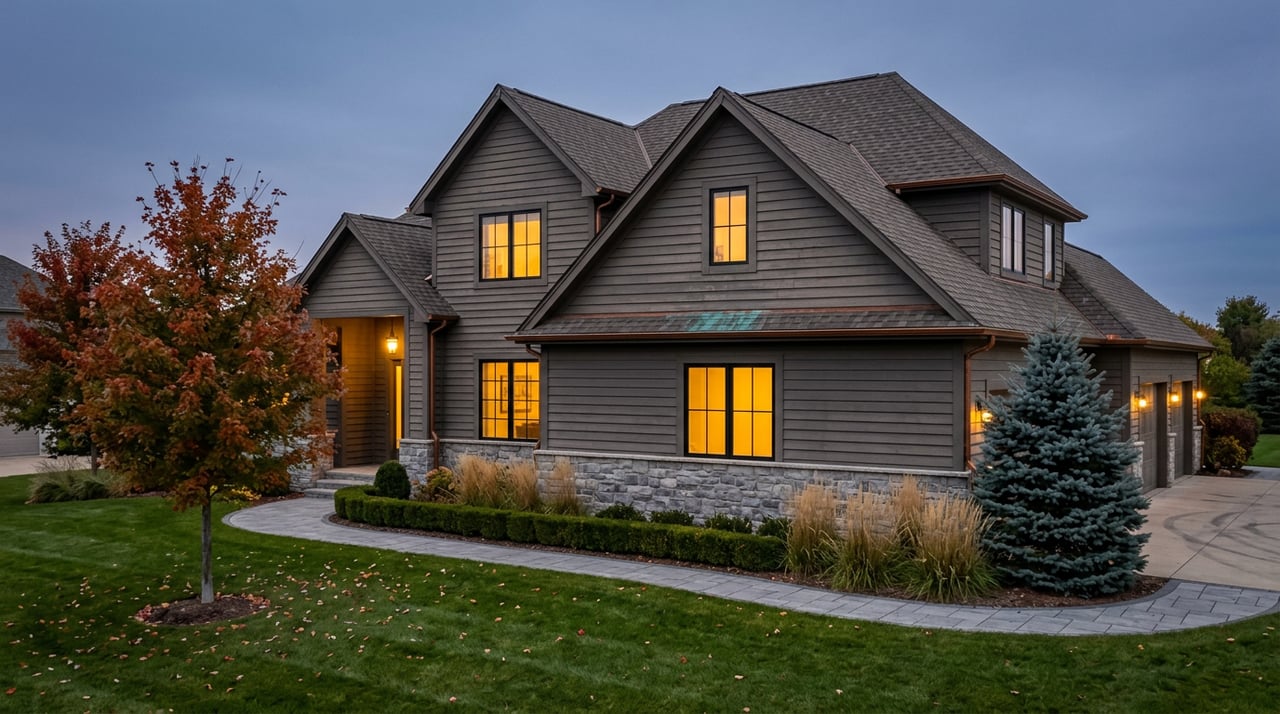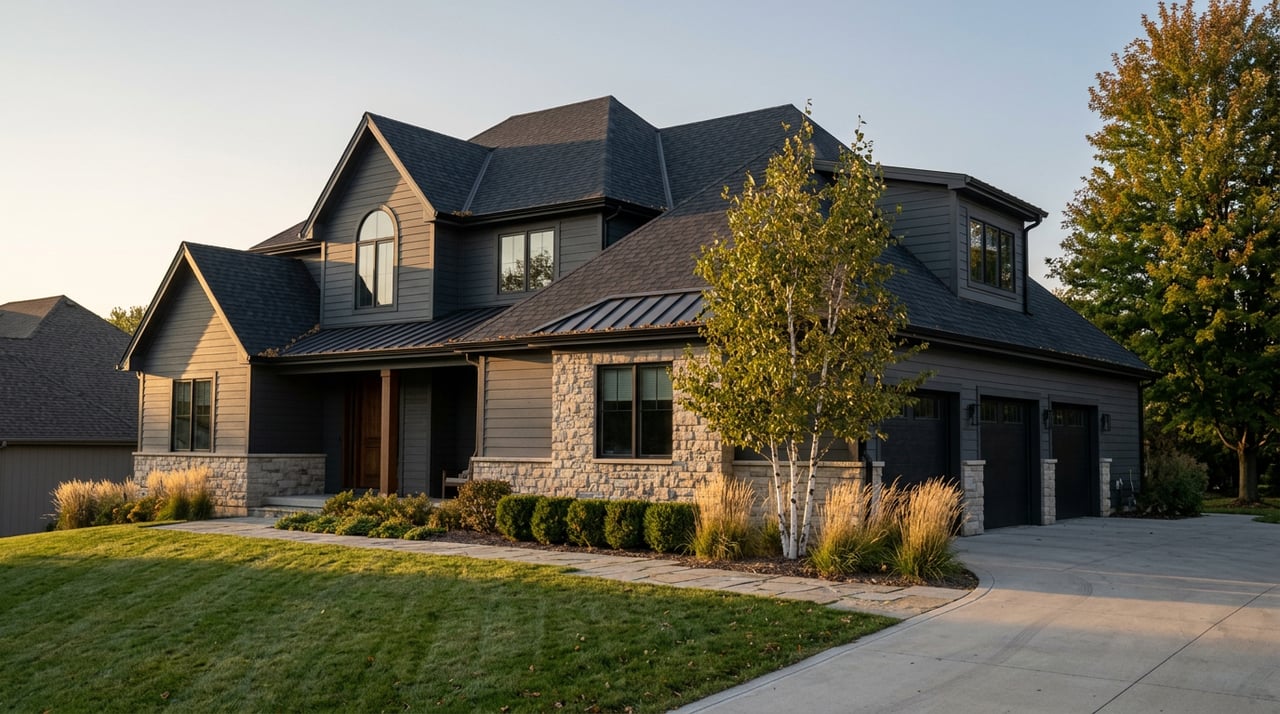
Two homes in Centennial go on the market the same week this year. Both are ranch-style, both sit within a mile of each other, both list somewhere in the mid $600,000s. One gets an offer in nine days. The other is still sitting there a month and a half later with a price cut posted. Ask either seller what "the Centennial market" is doing right now and you'll get two completely different answers, and both will be right.
That's the problem with treating Centennial's median home price as a single number. It isn't one. It's an average pulled from at least three markets running at different speeds, and if you're buying or selling here in 2026, knowing which speed your property belongs to matters more than knowing the citywide median at all.
The Number You're Quoting Depends on Who You Ask
Start with the confusion baked into the headline figure itself. The Colorado Association of Realtors reported in its June 2026 market trends release that Centennial's median sale price hit $725,000 in May 2026, up 4% from the same month a year earlier, with inventory down 23% compared to the year before. That's a tight, appreciating market by any conventional read.
Meanwhile, portal aggregations of active listings from the same summer put Centennial's median list price closer to $650,000, with price per square foot actually declining slightly month over month. Both numbers are accurate. They're just measuring different things: one tracks closed sales reported through the MLS, the other tracks what's currently sitting on the market waiting for a buyer. When those two figures diverge by $75,000, it tells you something the average headline won't: homes that close are outperforming homes that are still listed, which is exactly what you'd expect in a market where good inventory sells fast and gets replaced by less competitive listings that linger.
That gap between "what sold" and "what's for sale" is your first clue that Centennial isn't behaving like one uniform market.
The Citywide Split: Fast Lane, Slow Lane
Local market reporting through mid-2026 has been blunt about what's actually happening underneath that median: Centennial has split into a bifurcated market. Correctly priced, move-in ready homes in strong pockets are selling in 7 to 14 days, often with multiple offers. The citywide average days on market, closer to 20 to 28 days, is being pulled upward by a separate pool of listings that sit for 30 to 60 days before a price adjustment finally moves them.
Those two groups aren't randomly distributed. The homes selling in under two weeks tend to be updated, well-staged, and priced against recent comps rather than against what the seller feels the house is worth. The homes drifting past a month tend to have deferred maintenance, dated finishes, or an asking price anchored to what the neighbor got two years ago instead of what's closing today. In a market with sub-two-months of supply, as Centennial has run for most of the past year, sellers technically hold leverage. But that leverage only shows up for the sellers who've done the prep work. Everyone else is competing against their own overpricing.
The Split Repeats Inside the Neighborhoods You'd Assume Are Safe
Here's the part that surprises people who've only looked at the citywide number: the same fast lane and slow lane split shows up again once you zoom into individual neighborhoods, even the ones with strong reputations.
Take Piney Creek, the master-planned community on Centennial's east side with its own trail system, clubhouse, and pool. Recent trailing 12-month sales data puts its median sale price in the $730,000 to $755,000 range, which sounds like a straightforward premium address. But the average days on market across all Piney Creek sales sits at 41 to 44 days, not the 7 to 14 days you'd expect from a "hot" neighborhood. That average is being generated the same way the citywide average is: a subset of homes there sell almost immediately, and a subset sits for two months, and the blended result looks merely decent instead of showing you either extreme.
Saddle Rock Ridge tells an even sharper version of the story. As of January 2026, homes there were selling for a median of $522,000, down 8.9% from a year earlier, with average days on market climbing to 47 from 37 the prior year, and total sales volume dropping from 26 homes to 15. That's a real neighborhood, inside a broader Saddle Rock area that generally carries a premium reputation in Centennial, showing a genuine one-year slowdown. A buyer or seller who anchors their expectations to "Saddle Rock is one of the good ones" without checking the specific pocket they're transacting in is working from outdated information.
The lesson isn't that any of these neighborhoods are declining as a whole. It's that neighborhood-level reputations lag neighborhood-level reality, and the gap between the two is where pricing mistakes happen.
What's Driving the Split
Three forces are keeping this bifurcation in place rather than letting it resolve into one clean market.
The first is inventory. With supply down 23% year over year as of May 2026, there simply aren't enough listings to force weaker product to compete on price fast enough. A dated home can sit for two months without the seller feeling real pressure, because there's no flood of comparable inventory undercutting them. That's different from a true buyer's market, where an overpriced listing gets punished within days.
The second is geography. Centennial straddles the Arapahoe and Douglas county line, and the eastern edge of that boundary is exactly where new construction has been picking up. Builders have more room to work with in eastern Arapahoe and Douglas County than they do inside Centennial's built-out core, where buildable land is scarce. That new supply is a real wildcard for the upper end of Centennial's resale market. It gives move-up buyers a newer alternative nearby, which could eventually pull some demand away from older resale inventory that isn't updated to compete. So far the effect has been limited, mostly because the new product sits in a different price tier and location than most of Centennial's existing neighborhoods, but it's the kind of pressure that builds slowly and then shows up all at once in the comps.
The third is the attached-home segment, which is behaving almost like a fourth market entirely. Townhomes and condos in Centennial have been trading in the $400,000s, well below the single-family median, and statewide reporting through early 2026 flagged rising HOA dues and insurance costs as a real qualifying obstacle for buyers in this segment. If you're comparing a detached home's days-on-market to a condo's, you're not comparing apples to apples. You're comparing two products with different buyer pools, different financing friction, and different cost trajectories.
How to Tell Which Speed Your Home Is In
None of this is abstract if you're the one pricing a listing or writing an offer this quarter. The practical question is simple: which lane does this specific property belong to, not which lane does the neighborhood belong to. A few checks that actually answer that:
- Pull the three most recent closed sales within a quarter mile, not the neighborhood-wide median, and compare condition line by line.
- Check how long those specific comps sat before going under contract, not just their final sale price.
- If a listing has been active more than three weeks in a neighborhood where the reported average is under two weeks, treat that as a signal about the property or the price, not the market.
- Separate attached and detached comps completely. A condo's days-on-market trend tells you nothing useful about a single-family home two blocks away.
- Ask whether the comp set includes anything within the last 60 days. Inventory this tight means a comp from six months ago can already be stale.
Sellers who price against this level of detail tend to land in the fast lane. Sellers who price against the citywide median tend to find out the hard way that the median was never describing their specific home.
Frequently Asked Questions
Why do different sources report such different median prices for Centennial? Trade association data like the Colorado Association of Realtors reports closed sales through the MLS, which reflects what buyers actually paid. Portal aggregators often report active list prices, which reflect what sellers are currently asking. When inventory is tight and well-priced homes sell quickly, closed prices can run meaningfully higher than the median of what's still sitting on the market.
Is Centennial a buyer's market or a seller's market right now? Structurally, thin inventory (down 23% year over year as of May 2026) gives sellers an advantage. But that advantage isn't evenly distributed. It belongs to sellers with updated, correctly priced homes. A dated or overpriced listing can still sit for a month or two even in a technical seller's market.
Should I worry about new construction nearby hurting my resale value? The new construction building up in eastern Arapahoe and Douglas County is worth watching, particularly for upper-end resale homes, but the impact so far has been contained because Centennial's core neighborhoods have little buildable land left for direct competition. It's a longer-term pressure to track rather than an immediate concern.
If you're trying to figure out which lane your Centennial home actually belongs in, or which submarket makes sense for where you want to land next, that's exactly the kind of pricing and comp analysis T.J. Gordon works through with clients every week. Reach out for a free home valuation or a straight conversation about timing, and let's find out what the data actually says about your specific address.