Thinking about turning that Littleton basement into livable space but not sure if the math works? You are not alone. Many homeowners weigh the comfort and lifestyle boost against the upfront cost, and they also want clarity on what will matter at resale. In this guide, you will see realistic cost ranges, how buyers and appraisers in Littleton view finished basements, code checkpoints, and the smart features that protect value. Let’s dive in.
Cost basics in Littleton basements
Finishing a basement can mean a simple refresh or a full suite with a bedroom and bath. Your scope drives both cost and future value in Littleton and across Arapahoe County.
What “finished” really means
- Basic conversion: paint, flooring, lighting, and trim. Buyers see this as extra hangout space.
- Midrange finish: framed and insulated walls, finished ceiling, recessed lighting, quality flooring, storage, HVAC and electrical improvements, and often a bathroom or rough-in. This is the most common and often the most cost-effective for resale in suburban markets.
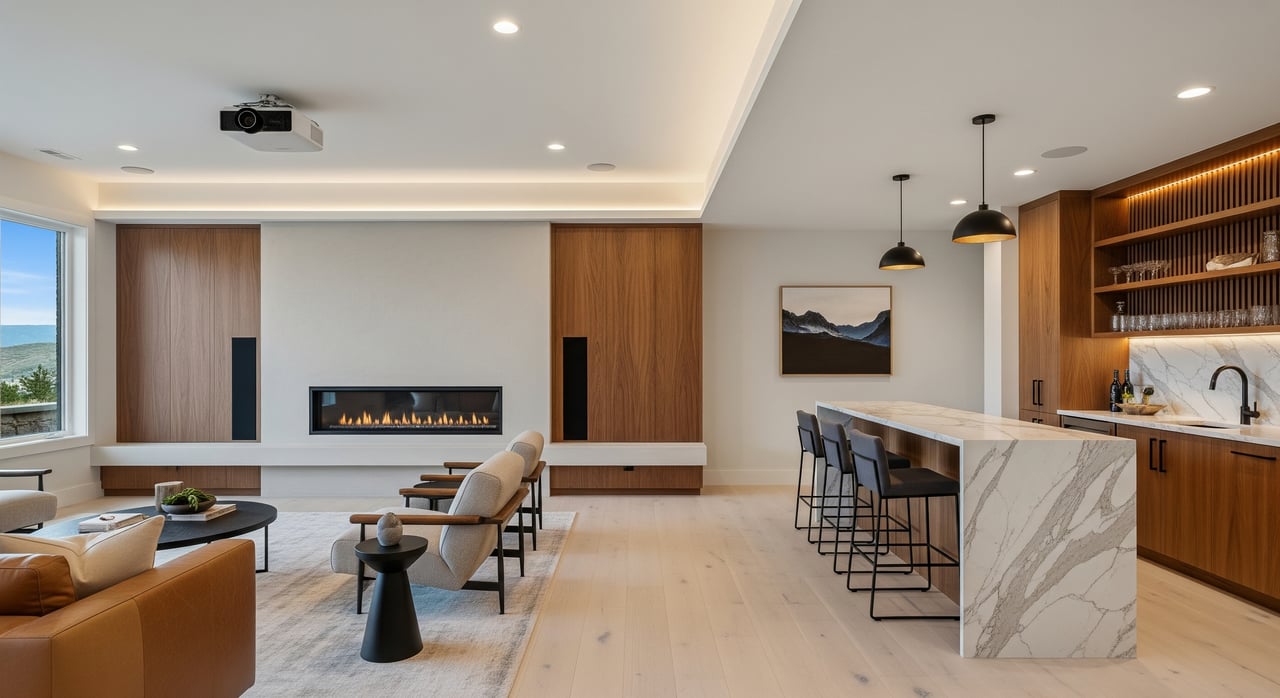
- High-end or suite level: full bath, kitchenette or wet bar, higher-end finishes, separate entrance where feasible, soundproofing, and dedicated HVAC. This can support multigenerational living or rental potential.
Typical line-item costs
Costs vary with Denver-metro labor and your home’s condition, but these ranges are common:
- Per square foot: roughly $30–$60 for basic, $60–$120 for midrange, and $120–$200+ for complex or luxury scopes.
- Full bathroom addition: about $10,000–$40,000 depending on fixtures and plumbing complexity.
- Egress window: about $1,500–$6,000 each, depending on excavation and well materials.
- Waterproofing or moisture control: interior solutions often $2,000–$8,000; exterior excavation and drainage can be $5,000–$20,000+.
- Radon testing and mitigation: testing is inexpensive; mitigation systems are often $800–$2,500.
- HVAC extension or mini-split: commonly $1,000–$6,000+.
- Electrical upgrades: often $1,000–$5,000+.
- Permits and inspections: typically several hundred to a few thousand dollars.
Hidden or condition-related costs can include remedying unpermitted work, addressing mold or rot, structural fixes, or abating lead or asbestos in older homes. Ceiling height and duct runs also affect both usability and budget.
Value at resale in Littleton
Finished basement space increases marketability and daily utility, but it does not always return dollar-for-dollar. In Littleton, quality, permits, and alignment with neighborhood norms drive value more than raw square footage.
How buyers and appraisers look at it
- Total Finished Square Feet matters in local MLS and appraisal practice. Unpermitted or noncompliant work can be excluded, especially bedrooms without legal egress.
- Quality and function are decisive. Bright, dry, comfortable spaces with modern finishes count as true living area in buyers’ eyes.
- Bedrooms and baths matter. Legal bedrooms, proper egress, and at least a 3/4 bath create stronger appeal than a single large rec room.
- Permits build confidence. Permitted, inspected work supports appraiser acceptance and helps financing go smoothly.
- Market cycles matter. In slower markets, buyers scrutinize finishes and compliance; in hotter markets, they may accept more variability.
What returns to expect
Industry analyses generally show finished basements recoup a substantial portion of cost, often in a mid-range of about 50–80 percent depending on scope, finish level, permits, and neighborhood expectations. In Littleton’s suburban context, a midrange, permitted finish that adds a bath and a legal bedroom typically performs best. Premium, highly customized features may see a smaller recoup relative to cost.
Scope selection: match the neighborhood
Your best strategy is to match the finish level to nearby comps.
- If most nearby homes have finished basements, leaving yours unfinished can be a handicap at resale. A midrange, permitted finish often closes that gap efficiently.
- If finished basements are less common, a quality, flexible finish can stand out, but avoid over-customizing beyond local expectations.
- If you plan to create a rental or in-law suite, confirm feasibility of a separate entrance, parking, and zoning or HOA requirements before you invest.
Permits and code must-knows
Most basement finishes require permits. Properties within Littleton city limits work with the City of Littleton Building Department. Homes in unincorporated areas fall under the Arapahoe County Building Division. HOAs may add requirements, especially for exterior changes like egress window wells.
Bedrooms and egress
If you add a bedroom, expect emergency escape and rescue openings to be required. Typical benchmarks include a minimum net clear opening of 5.7 square feet, minimum opening height of 24 inches, minimum opening width of 20 inches, and a maximum sill height of 44 inches above the finished floor. Always confirm local amendments.
Inspections and timeline
Typical permits include building, electrical, plumbing, and mechanical, followed by inspections for rough framing, rough electrical and plumbing, insulation, and final sign-offs. Permitting and inspections can add weeks to months to your project timeline depending on plan review and workloads. Keep copies of permit numbers and final inspection certificates for your records and future disclosures.
Design choices Littleton buyers want
Thoughtful design beats flashy upgrades. Focus on features that are durable, flexible, and easy to maintain.
High-impact features
- Legal bedroom with proper egress and a closet.
- Full bath or at least a 3/4 bath to make the space function independently.
- Durable flooring like LVP or tile where moisture is a concern.
- Bright, layered lighting with recessed LEDs and task lighting.
- Storage solutions such as under-stair closets and built-ins.
- Clean mechanical access and visual separation from living spaces.
- Moisture and radon mitigation with visible documentation.
- Neutral finishes and flexible layouts that work for media, office, or guest use.
- Soundproofing in ceilings and walls to improve livability.
Nice-to-have features
- Wet bars and high-end entertainment centers can be appealing but may not return as much as a bedroom or bath.
- Separate entrances can boost rental potential where feasible; verify code, grading, and HOA rules.
Health, moisture, and radon in Colorado
Colorado has elevated radon potential in many areas, including parts of the Denver metro. Radon testing is quick and inexpensive; mitigation is straightforward and improves buyer confidence. Moisture control is a must. Address drainage at the exterior, consider interior sump and drainage solutions where needed, and use materials suited to below-grade spaces. These steps protect your investment and keep the space comfortable year-round.
Budgeting and contractor tips
A disciplined plan will help you avoid over-improving for the neighborhood.
- Get multiple written estimates with line items for permits, waterproofing, egress, HVAC, electrical, framing, and finishes.
- Ask contractors to confirm who will pull permits and provide inspection sign-offs.
- Verify liability and workers’ compensation insurance and ask for local references.
- Clarify ceiling height impacts and any duct or beam changes early.
- Set aside contingency funds for hidden conditions, especially in older homes.
Should you finish before selling?
It depends on your timeline, budget, and comps. If most nearby homes offer finished basements and you can complete a midrange, permitted finish efficiently, it can improve marketability and perceived value. In a hot market or in areas where buyers prefer to customize, you may not need to rush into a full build-out. Local, data-driven guidance and recent comparable sales are your best decision tools in Littleton and across Arapahoe County.
Documentation that protects resale
Strong documentation makes buyers and appraisers comfortable and can smooth financing.
- Permits and final inspection reports for all disciplines.
- Proof that bedrooms meet egress and code.
- Contracts, warranties, and receipts for major systems like radon mitigation, sump pumps, and HVAC.
- Photos of key phases, such as rough-ins, to show quality and compliance.
Ready to compare what a finished basement would mean for your specific neighborhood and price point? For local comps, strategy, and a clear plan, connect with T.J. Gordon. Get your free home valuation and let’s build a budget that makes sense.
FAQs
How much does a Littleton basement finish cost per square foot?
- Many projects fall between $60–$120 per square foot for a midrange finish, with basic scopes lower and complex or luxury scopes at $120–$200+.
Do Littleton buyers value basement bedrooms and baths?
- Yes. Legal bedrooms with proper egress and a full or 3/4 bath typically add stronger appeal and help the space function like true living area.
Will a finished basement be counted in appraised square footage?
- Only if it is permitted and meets local code and MLS standards. Unpermitted areas or noncompliant bedrooms may be excluded.
What is the typical resale return for a finished basement?
- Industry analyses often show a substantial but partial recoup, commonly around 50–80 percent depending on scope, quality, permits, and neighborhood norms.
Do I need permits to finish a basement in Littleton or unincorporated Arapahoe County?
- Yes for most work affecting structure, electrical, plumbing, or HVAC. Contact the City of Littleton or Arapahoe County as applicable, and confirm any HOA requirements.
What are the egress rules for basement bedrooms?
- Bedrooms generally require an emergency escape and rescue opening that meets minimum size and height clearances; confirm local amendments and inspections.
Should I test for radon before finishing a basement in Colorado?
- Yes. Testing is simple and mitigation is straightforward if levels are elevated, which improves safety and buyer confidence.
Is a wet bar worth it for resale compared to a full bath?
- A full bath usually offers broader value and utility. Wet bars can be attractive but tend to be more niche at resale.