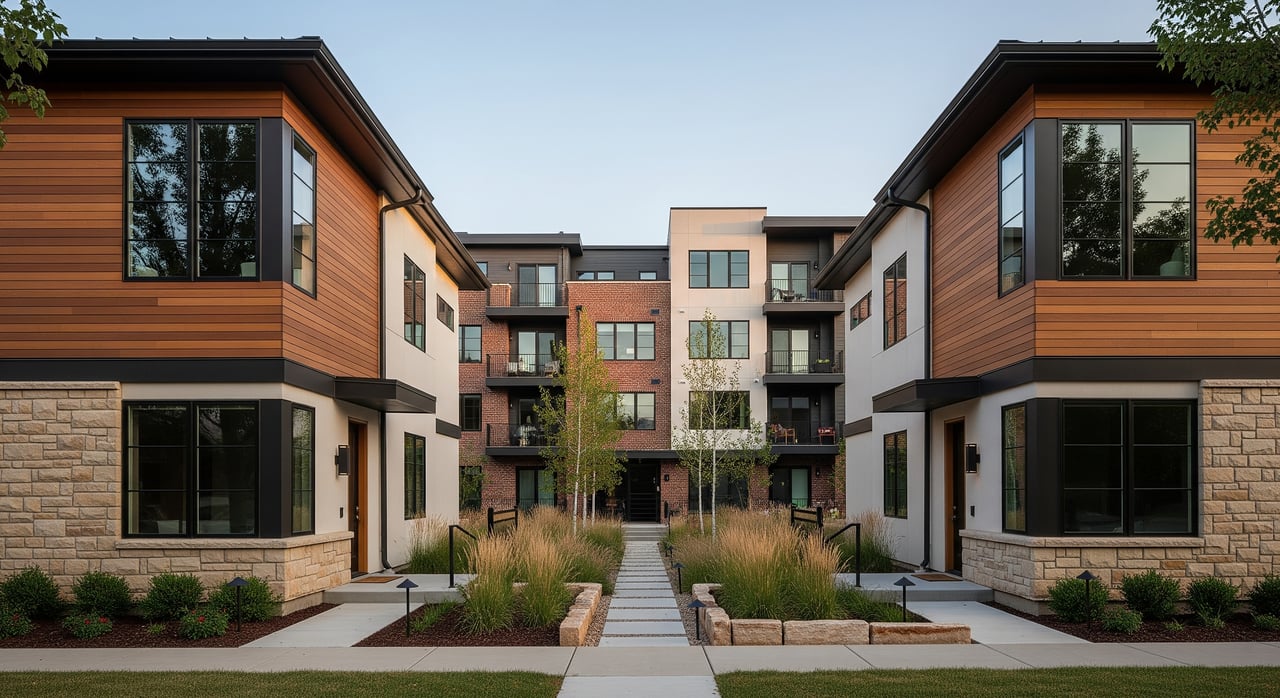
Thinking about house hacking in Lakewood but not sure whether a duplex or a condo is the smarter move? You are not alone. Many first-time investors want rental income to offset the mortgage without taking on more risk than they need. In this guide, you will compare financing, monthly costs, rental flexibility, and exit options for duplexes and condos in Lakewood so you can move forward with confidence. Let’s dive in.
Lakewood market context: start here
Before you choose a property type, verify the local picture. Lakewood’s submarkets can vary, so a quick scan up front can save you time and money.
- Check current pricing, inventory, and days on market for duplexes and condos in your target neighborhoods. Submarkets like Belmar, areas near the Denver border, and Green Mountain or Applewood-adjacent areas can perform differently.
- Pull rent comps and vacancy trends for 1–2-bedroom units. Confirm typical lease terms and turnover rates for your area.
- Confirm zoning and permitted uses with the City of Lakewood and Jefferson County. Make sure a duplex is a legal two-unit and not an unpermitted conversion.
- If short-term rentals are part of your plan, verify rules and any licensing before you buy. Do not assume short-term rentals are allowed.
- For any property, review Jefferson County Assessor records, title, and any HOA documents. Confirm that any second unit is permitted and has the proper certificate of occupancy.
Duplex vs. condo: quick snapshot
Financing access
- Duplex: Can qualify for owner-occupied 2–4 unit loans. FHA programs may allow as little as 3.5% down for qualifying borrowers who will live in one unit.
- Condo: Often similar to a single-unit primary residence. FHA or VA may require project approval, which can limit options.
Monthly costs
- Duplex: No HOA in many cases, but you carry full maintenance and larger capital items like roof and systems.
- Condo: HOA dues cover many exterior items and reserves, but dues can be significant and subject to special assessments.
Rental flexibility
- Duplex: Typically more flexible to rent the other unit long term, subject to local code and your loan and insurance rules.
- Condo: HOA rental caps, minimum lease terms, or owner-occupancy rules can limit your plan.
Exit options
- Duplex: Appeals to both investors and owner-occupants; easier to operate as full rental later.
- Condo: Simpler single-unit resale but depends on HOA health and rental policies.
Financing and entry costs
Duplex financing essentials
For an owner-occupied duplex, many buyers consider federal programs that allow low down payments on 2–4 unit properties. FHA programs can permit 3.5% down for qualifying borrowers who will live in one unit. Conventional loans often require higher down payments for 2-unit properties, and lenders may ask for extra cash reserves. Ask how your lender treats projected rental income and what percentage of market rent they will count for qualification.
Condo financing essentials
Condos are usually financed like a primary residence, with conventional down payments starting around the low single digits for first-time buyers. FHA and VA loans on condos often require the building or project to meet approval standards. If the project is not approved, you may need a different loan type or a larger down payment. Always verify project approval status early.
Entry costs beyond the down payment
- Closing costs: Appraisal, title, and lender fees apply to both. Duplex appraisals may factor in rental income.
- Reserves: Lenders commonly require reserves for multi-unit loans. Expect higher reserve needs on a duplex compared to a single condo unit.
- Inspections: Older duplexes can have deferred maintenance, so you may want specialized inspections for roof, mechanicals, foundation, and sewer.
- HOA-related costs: For condos, review budgets and reserve studies and plan for any move-in fees or transfer costs.
Ongoing costs and management
HOA vs. maintenance responsibilities
- Duplex: You control the entire building. You also pay for all exterior and structural work, landscaping, common systems, and capital items. This increases responsibility but gives you control over timing and quality of work.
- Condo: The HOA handles common areas and exterior components, funded through dues. Review the HOA’s budget, reserves, and any special assessment history to understand risk.
Insurance differences
- Duplex: Expect a landlord or dwelling policy that accounts for an owner-occupied building with rental exposure. Premiums can be higher than for a condo unit.
- Condo: You carry an HO-6 policy for your unit’s interior, personal property, and liability. The HOA carries a master policy for common elements. Confirm whether the master policy is bare walls-in or all-in so you can close any coverage gaps.
Taxes and planning
Both duplexes and condos are taxed on assessed value. Check the Jefferson County Assessor for parcel history and note any changes after renovations. Keep an eye on mill levies and how they may affect future tax bills.
Cash-flow line items to model
Build a simple pro forma with conservative assumptions:
- Gross rent and a vacancy allowance of 5 to 10 percent
- Property management fees if you will not self-manage
- HOA dues for condos
- Insurance, property taxes, and any utilities you cover
- Maintenance and repairs, often 1 to 3 percent of property value annually or 10 to 15 percent of gross rent, with older duplexes on the higher end
- Capital reserves for major systems over time
Rental flexibility and rules
Duplex rental flexibility
Many duplexes allow you to live in one unit and rent the other long term, subject to zoning, occupancy limits, and your loan and insurance terms. Without an HOA, you avoid project-level rental caps, and you can adjust your strategy as the market changes. Always verify that the property is a legal two-unit to protect financing, insurance, and resale.
Condo rental restrictions
HOAs often set rental caps, minimum lease lengths, application steps for tenants, or owner-occupancy requirements. These rules can limit your ability to house hack or adjust to market changes. Project-level lending approvals can also affect investor and owner financing later, which matters for future resale.
Local checks in Lakewood
Confirm zoning and permitted density with the City of Lakewood and Jefferson County. Verify whether any rental license or safety inspection is required. If you plan to explore short-term rentals, review the municipal code for eligibility and any licensing. Make sure your mortgage and insurance terms align with your rental plan.
Exit strategies and taxes
Selling later
- Condo: Resale can be influenced by HOA health, dues, rental caps, and any pending litigation or special assessments. Buyers will review HOA documents closely.
- Duplex: You can position it to investors or to owner-occupants seeking income. In some markets, duplexes attract buyers targeting stronger cap rates than condos.
Converting use
- Duplex: You can move out and rent both units to operate it as a full investment, subject to local rules and your loan.
- Condo: You cannot subdivide the unit. Your options are to live in it, rent it under HOA rules, or sell it.
Tax basics for house hackers
Rental income is reportable for the rented portion. You may deduct items such as mortgage interest on the rental portion, property taxes, insurance, maintenance, and depreciation, with residential rental typically depreciated over 27.5 years. If you sell, depreciation recapture can apply. Owner-occupant capital gains exclusion may be available for a condo used as a primary residence for two of the last five years. For a duplex you live in, partial rules can be more complex. Coordinate your plan with a Colorado tax professional.
Build a simple pro forma
Use this template to compare a Lakewood duplex and condo side by side. Replace with your local numbers.
- Income
- Unit A rent + Unit B rent (or the condo’s rent if you move later)
- Less vacancy at 5 to 10 percent
- Operating expenses
- HOA dues for a condo, or a maintenance reserve for a duplex
- Property taxes and insurance
- Utilities you cover
- Property management if used
- Maintenance and repairs
- Net operating income
- Effective gross income minus operating expenses
- Debt service
- Annual mortgage payments
- Cash flow
- Net operating income minus debt service
Quick input ranges to test:
- Vacancy: 5 to 10 percent
- Maintenance: 1 to 3 percent of property value per year or 10 to 15 percent of gross rent
- Property management: 8 to 12 percent of collected rent if you outsource
- HOA dues: highly variable, so use the actual budget and reserve study
- Insurance: compare HO-6 for a condo versus a landlord policy for a duplex
Which fits you? A fast decision guide
Choose a duplex if:
- You want the most rental flexibility and the option to convert to a full investment later.
- You plan to self-manage and prefer control over the building and common areas.
- You are comfortable budgeting for higher maintenance and capital items.
Choose a condo if:
- You want simpler ownership with lower day-to-day maintenance.
- You are comfortable with HOA dues and working within rental rules and caps.
- You value easier entry price points and potentially simpler resale to owner-occupants.
Next steps for Lakewood buyers
- Define your submarket. Identify two or three Lakewood areas that fit your budget and commute.
- Verify numbers. Pull rent comps, check current inventory, and model vacancy and expenses.
- Align financing. Confirm loan options, condo project approval if needed, and how lenders count rental income.
- Read the fine print. For condos, review CC&Rs, bylaws, rental policy, budgets, and reserve studies. For duplexes, confirm legal two-unit status and permits.
- Quote insurance. Compare an HO-6 for a condo with a landlord policy for a duplex, and review the HOA’s master policy if applicable.
- Inspect thoroughly. Budget for deferred maintenance on older duplexes and watch for signs of underfunded HOA reserves in condos.
- Plan the exit. Decide how long you will house hack, your rent timeline, and your resale or hold strategy.
If you want a local partner to help you compare real listings, run a pro forma, and navigate financing and HOA or zoning questions, reach out to T.J. Gordon. You will get clear, research-driven guidance and a plan tailored to your goals in Lakewood.
FAQs
What is house hacking in Lakewood?
- House hacking means you live in a property and rent out the other unit or your unit later to offset your mortgage, using local rules and financing that fit Lakewood’s market.
How do duplex loans work for owner-occupants?
- Many programs allow owner-occupied financing on 2–4 unit properties, and FHA can permit 3.5 percent down for qualifying buyers who live in one unit.
Do Lakewood condos allow rentals for house hacking?
- Many HOAs set rental caps or minimum lease terms, so you must review the condo’s CC&Rs, bylaws, and rental policy before you plan to rent.
What costs are unique to condos in Lakewood?
- HOA dues, reserve contributions, and potential special assessments are key. Confirm the HOA’s budget, reserve study, and master insurance policy.
What costs are unique to duplexes in Lakewood?
- You carry full maintenance and capital items like roof and systems, and you may pay higher insurance than a condo’s HO-6 policy.
Can I use rental income to qualify for my loan?
- Many lenders count a portion of projected rental income for a 2-unit purchase, but policies vary, so confirm the percentage and documentation needed with your lender.