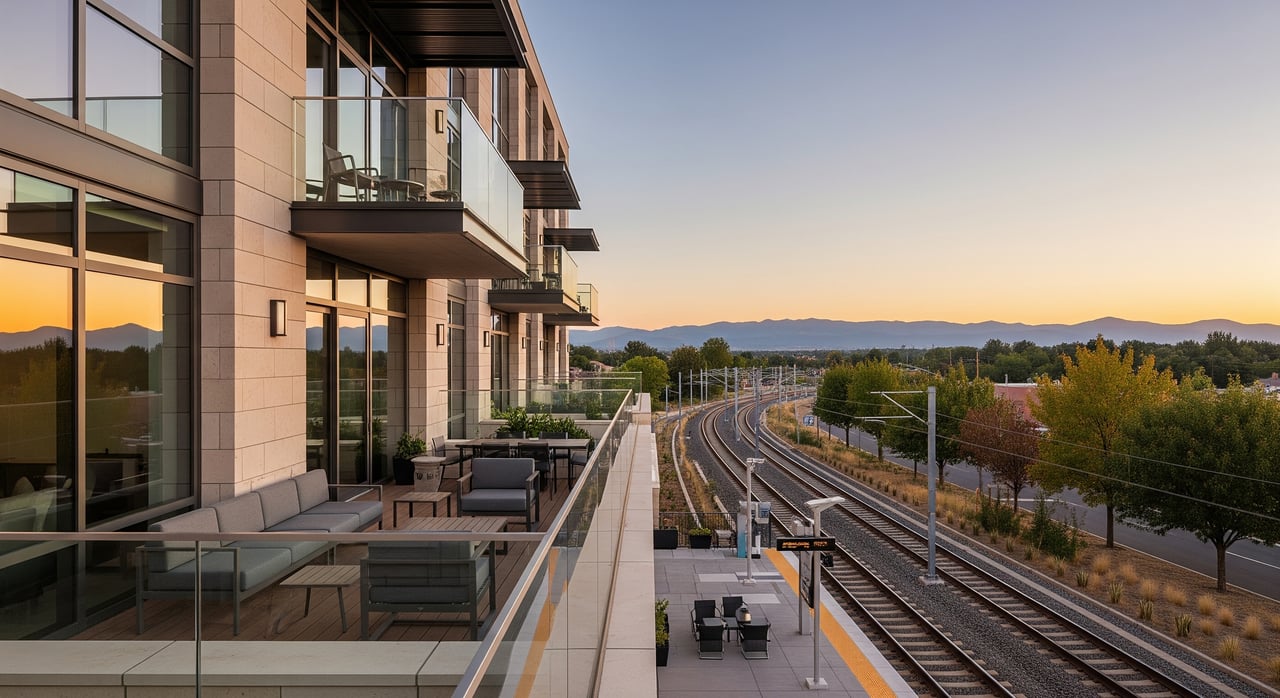
You are not imagining it. Properties close to Lakewood’s W Line often lease faster and hold appeal for renters who value quick access to downtown Denver and nearby jobs. If you are weighing a condo or small multifamily purchase near a station, you face a mix of opportunity and fine print, from HOA rules to parking realities.
In this guide, you will learn how to screen W Line opportunities quickly, what unit mixes tend to work, how to think about walkability and parking, and the due diligence steps that protect your return. You will also get a practical scoring checklist you can use right away. Let’s dive in.
Why the W Line matters
The W Line links central Denver west into Jefferson County and serves several Lakewood stations. That connection shortens commutes and encourages transit‑oriented development around key stops. Higher pedestrian activity and targeted public investment can support steady renter demand.
Start by confirming service and frequencies for the nearest station. Review the current schedule and station map on the official site for the RTD W Line rail service. Reliable service frequency improves the appeal of smaller units and can expand your renter pool.
Treat each station as a micro market
“Near the W Line” is not one market. Station areas in Lakewood can differ in zoning, building heights, parking rules, sidewalks, and planned public projects. One block may be walkable and investor friendly, while the next has strict HOA rental caps or limited parking.
Before you get attached to a property, pull the zoning details and look for station‑area plans or TOD overlays. The City of Lakewood Planning Department publishes zoning maps, area plans, and code updates that shape density, uses, and parking minimums. Look for any corridor plans or capital projects that could impact walkability and long‑term desirability.
Unit mix that fits transit demand
Renter demand near transit often skews to studios and 1‑bedrooms, along with efficient 2‑bed layouts that work for roommates. If you aim at commuters and mobile professionals, leaning into smaller, well‑planned units can make sense.
Families do rent near stations, but the share of 3‑bed and larger units is often lower right next to transit. If you consider bigger units, confirm the local amenity set and parking availability. Across unit sizes, the right features matter: in‑unit laundry, secure package delivery, bike storage, fast internet, and pet‑friendly policies help you compete.
Walkability and first‑mile factors
Distance matters, but paths matter more. Properties within about a 5 to 10 minute walk, roughly 0.25 to 0.5 miles, usually capture the strongest walkable demand. Sidewalk continuity, safe crossings, and lighting can be as important as straight‑line distance.
Do not stop at rail proximity. First‑mile options expand a station’s reach. Check bus feeders and frequency through the RTD system resources. Protected bike lanes and micromobility access also boost the catchment area. If access is inconvenient, expect higher car reliance and stronger parking expectations.
Parking: get the ratio right
Lakewood remains more car‑oriented than central Denver. Many renters still want at least one dedicated space, even near rail. For small multifamily, a working target is typically 0.8 to 1.2 spaces per unit, with studios and 1‑beds needing less than larger units.
For condos, deeded parking can be a value driver. Review guest parking rules, shared parking easements, and any on‑street permit zones that could limit supply. Construction near stations can also reduce on‑street parking during projects, so factor that into underwriting.
Read renter‑demand signals
Strong locations line up jobs, services, and daily amenities within a short transit or bike ride. Look for grocery and café access, gyms, parks, and a healthy daytime population from nearby offices or institutions.
When you model rents and absorption, check local demographics and household formation trends for the area. The American Community Survey can help you understand age cohorts, incomes, commute patterns, and household sizes. Pair this with current rent comps and vacancy data from reliable market sources before you set expectations.
Due diligence that protects returns
Think in four buckets: market and financial, legal or HOA, physical and site, and neighborhood or planning. Use this as your baseline checklist.
Market and financial
- Pull 8 to 12 rent comps within the same walkable radius and similar unit mix. Include active listings and recent leases.
- Verify vacancy and turnover history with the seller and compare to market reports.
- Scrub expenses: utilities and allocations, property taxes, insurance, management, reserves, and maintenance. For condos, analyze HOA dues and confirm any special assessments.
- Confirm current real property tax details through the Jefferson County Assessor.
Legal and HOA
- For condos: review bylaws, CC&Rs, meeting minutes, budget, reserve study, insurance, delinquency rates, rental caps, waiting lists, and any litigation.
- Financing: many lenders require condo project approval and have concentration thresholds. Verify investor loan options early.
- Short‑term rental policies: confirm local code and HOA rules. Start with the Lakewood Municipal Code and then verify specifics with the HOA.
- Title and easements: confirm parking rights, use restrictions, and any easements that could affect operations.
Physical and site
- Inspect building systems appropriate to age and construction type. Flag roofs, HVAC, plumbing, electrical, and structure.
- Rail proximity: evaluate sound and vibration. Look for double‑pane glazing, setbacks, and any existing mitigation.
- Parking: document the exact number of assigned spaces, guest policies, security, surface versus covered, and ADA considerations.
- Utilities and metering: single meter versus individual meters changes expenses and billing.
- Environmental: review flood maps and test for radon. Start with the FEMA flood map portal and local GIS.
Neighborhood and planning
- Confirm station‑area plans, zoning overlays, parking rules, and planned public projects through the City of Lakewood Planning Department.
- Check the pipeline for new multifamily or condo deliveries that could affect vacancy and concessions.
- Review local crime data and safety trends. The Lakewood Police Department pages can point you to current resources.
Leases and tenant files
- Verify lease terms, rent rolls, deposit handling, payment history, and any month‑to‑month situations.
- For condos, confirm owner‑occupancy rates and any investor concentration issues that could affect financing.
Fast screening checklist you can use now
Give each item 0 to 2 points and add them up. Properties that score 14 or higher are typically worth deeper diligence. Scores of 10 to 13 are conditional. Scores below 10 usually require a clear value‑add plan or carry more risk.
Location and transit potential
- Distance to station: under 0.25 mile earns 2 points, 0.25 to 0.5 mile earns 1 point, over 0.5 mile earns 0.
- Walkability: Walk Score of 70 or better or continuous sidewalk and bike connections earns 2. A score of 50 to 69 earns 1. Below 50 earns 0.
- Transit frequency: peak headways of 15 minutes or better, or strong feeder buses, earns 1.
Unit mix and building profile
- Unit mix aligned to transit demand: 60 percent or more studios and 1‑beds, or flexible 2‑beds, earns 2.
- Parking ratio: 0.8 or more spaces per unit earns 2. Between 0.5 and 0.79 earns 1.
- Condo policy signal: investor‑friendly condo with no rental cap and low owner concentration earns 2. HOA with strict caps or high owner‑occupancy earns 0.
Financial and legal footing
- Current rent versus market: within 10 percent of market earns 2. More than 10 percent below earns 1. More than 10 percent above earns 0.
- HOA health: solid reserves and no special assessments earns 2. Unknown reserves or elevated dues earns 0 to 1.
- Title and litigation: clear file earns 2.
Physical and risk profile
- Major systems: up‑to‑date inspections and no major deferred capital earns 2.
- Environmental: no floodplain or adjacent industrial concerns earns 2.
- Rail impacts: noise and vibration manageable with existing mitigation earns 2.
Common pitfalls to avoid
- Relying on straight‑line distance. Always walk the route, note crossings, lighting, and grade changes.
- Underestimating parking expectations. Lakewood renters often still want at least one space.
- Skipping HOA deep dives. Rental caps, reserve gaps, or pending assessments can erase returns.
- Ignoring pipeline supply. New deliveries near your station can shift vacancy and concessions for a year or more.
Putting it together
If you find a candidate near a station, run the quick screen first. If it scores 14 or higher, schedule a site visit, pull zoning and station‑area plans, and request HOA or building documents. Model a base case and a conservative case that includes temporary rent softness if construction or new supply is due.
As you compare options, focus on what you can control: unit finishes, in‑unit laundry, secure package and bike storage, and reliable internet. Small upgrades that match transit‑oriented renter priorities can raise rentability without overcapitalizing.
Ready to evaluate a specific address near the W Line or build a short‑list based on your returns target? Reach out for a tailored game plan and property tour strategy. Connect with Unknown Company to get started.
FAQs
What makes W Line locations attractive to Lakewood renters?
- Rail access shortens commutes to downtown and job centers, and station areas often add walkable services that support demand.
How close should a Lakewood investment be to a W Line station?
- Aim for a 5 to 10 minute walk, roughly 0.25 to 0.5 miles, and prioritize safe, continuous walking routes over straight‑line distance.
How should I think about parking near Lakewood stations?
- Many renters still value at least one space; a ratio of 0.8 to 1.2 spaces per unit is a useful target, with deeded spaces adding value in condos.
What condo HOA rules can impact investing by the W Line?
- Rental caps, waiting lists, low reserves, special assessments, and litigation risk all affect rentability, financing, and long‑term returns.
Where can I verify Lakewood zoning and station‑area plans?
- Review zoning maps and corridor plans through the City of Lakewood Planning Department and confirm any TOD overlays or parking rules.
How do I check flood or environmental risk before buying in Lakewood?
- Start with the FEMA Flood Map Service Center and local GIS, then inspect for radon and consider environmental reviews near industrial areas.